Star Freddie Highmore & EP Kerry Ehrin Talks Season 3 of Bates Motel
 On Monday Bates Motel returned to A&E for season three. Yesterday star Freddie Highmore, who plays Norman Bates, and executive producer Kerry Ehrin talked to the digital media about the new season.
Highmore talked to SciFi Vision about Norman and Annika (Tracy Spiridakos). "I guess it remains to be seen just how far their relationship [goes], whether it evolves definitively and conclusively already or not. So I guess we’ll have to wait and see in that respect.
"It is interesting that Norman’s action of looking at Annika through the window isn’t necessarily a trait unique to a serial killer. It wasn’t that he sought her out or aimed to do it. He merely stumbled upon the open window and peered in and was slightly transfixed. And I guess we slightly have to ask ourselves what would have happened had Norma (Vera Farmiga) not come down and caught him in the act, as it were. Would Norman have just realized that he was being slightly pervy and gone upstairs back to the house or would he have gone around and tried to break into her motel room?"
The two also talked to the site about things they do to step away from the darkness of the show and not let it get to them. Highmore said that he pitches Ehrin silly ideas, which she likes.
Ehrin told the site, "We do laugh a lot. I think you just, like life, if you have to deal with something sad, there’s always parts of life that renew you. You know, my kids are like an amazing haven of happiness. I stepped outside my kitchen this morning and orange blossoms were blooming. I think that’s the stuff that keeps you out of a black hole."
Highmore added, "We have the cold and grey in Vancouver, So we all huddle together around the fire in the living room and tell each other stories."
A&E Conference Call
Bates Motel
Star Freddie Highmore and Executive Producer Kerry Ehrin
March 11, 2015
2:00 pm ET
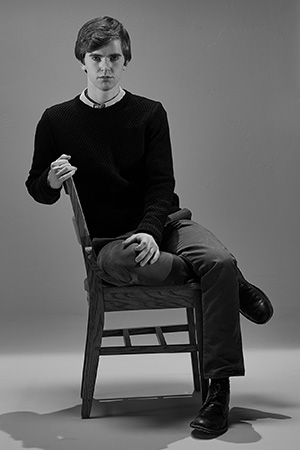 QUESTION: Freddie, how do you get into character because it doesn’t seem like you have far to go to get there.
FREDDIE HIGHMORE: It doesn’t seem like I do or it does?
QUESTION: Well, it seems pretty natural. I guess it's all that practice.
FREDDIE HIGHMORE: Yes. I don’t consider myself to be very similar to Norman. The American actor did obviously one thing and I just try and stay as much as possible on set in Vancouver and off stage as well. And then the rest of it is a character now that's having done two seasons before this one, you’re more aware of and you can easily slip into.
And this season was more changing him and making him a bit more mature with the self-awareness that he gained at the end of the second season and so perhaps trickier than giving a look or finding out who Norman was in this third season, it was more about discovering in what ways he would change and grow up.
QUESTION: Kerry, do you have anything to add? How you’re creating this character?
KERRY EHRIN: It’s definitely an evolution where Carlton and I began with the character in the first season. It’s a very different person at this point - and a lot of that has to do with self-awareness and also the natural development of teenagers to start seeing their parents as real people as opposed to gods or goddesses in their universe.
I think there’s a bit of that in it as well. And also this season very much playing with the game of control between him and Norma and the power struggle which is really delicious.
QUESTION: Norman is such an iconic character and horror. And of course Anthony Perkins did such a legendary performance in the role. Now that you’ve been doing the show and the role for three years, how much influence does the original Perkins’ performance have on your performance and how much are you trying to just completely make it your own?
FREDDIE HIGHMORE: I guess potentially now there are less comparisons that are made to it because people see the Norman on Bates Motel as being his own entity [as] opposed to necessarily [a] precursor to Anthony Perkins’ version
But at the same time I’ve re-watched Psycho before every season and in some ways tried implementing what Anthony Perkins brought to the role especially as the show continues because I’ve always seen that the end of Bates Motel not necessarily as the end of Psycho.
But the end of Norman is a lot closer to Anthony Perkins’ version than the boy that we saw at the start. But certainly we, I don’t think any of us feel tied constrainingly to Psycho or to any performance that came before.
QUESTION: Now the house and the motel are also iconic horror images. I know that it’s a new version of it built up in Canada but does working around that atmosphere add to the creepy feeling both as an actor and as a writer?
FREDDIE HIGHMORE: Yes, it does. I think the first time I stepped on the set, it [had] this weight already behind it when you look up and you see a very similar version of the house and the motel to the one that was in the original.
And then over time it seems to become in view with your own memories and events that took place in Bates Motel. Like from the set, for example, leading up, there’s still the blood stain or whatever they used to pretend to be blood from Deputy Shelby’s death in last season.
So there are little reminders to us all of how far he’s come.
KERRY EHRIN: There’s definitely a texture to that set that is emotional and you feel it when you’re there. It’s very cool.
QUESTION: Now that Norma knows about Norman’s blackouts, do you think that [she’s] going to ever let him back out on his own or is she sort of try and keep more and more control of him even though she’s already been overprotective towards him to start?
KERRY EHRIN: Yes, it’s sort of like any mother. If your child had something wrong with him, especially something you couldn’t control, your instinct would be to literally tie them to your ankle. I mean, you would want to be in as close proximity to them at all times as you possibly could be.
And then you add to that all the dark undercurrents and suspicions and that’s a terrifying ordeal for Norma. And yes, her instinct is to keep him as close as possible.
QUESTION: The ending of the season’s premiere was more or less open-ended but very suspicious. Is it safe to assume that Norman chilled Annika?
KERRY EHRIN: I feel like on Bates Motel it’s safe to assume anything because there’s an aspect to the storytelling that we love which there’s a lot up for interpretation and part of the fun of the stories that we do is slowly peeling away layers of truth to them. So I think that it’s safe to assume whatever anybody wants to assume.
FREDDIE HIGHMORE: It’s safe to assume that Norman will be killing again. That’s what everyone knows. It’s just when does he do it?
QUESTION: And will we know one way or another, by like the next episode, for sure what happened to her?
KERRY EHRIN: You’ll know more, yes.
QUESTION: We got a shower [scene], looked very familiar when Norman is looking in on Annika. Can we expect any other shower, bathroom-related scenes this season?
FREDDIE HIGHMORE: Definitely. There’s definitely another occurrence, really interesting bathroom seasons in many ways.
KERRY EHRIN: It is a different bathroom, though. We got a new bathroom set this year, which is amazing. I know it sounds stupid to say that we’re excited about a bathroom set but it’s such an amazing design and we got to film some really pivotal scenes in it. It’s inside the Bates house. And there’s some huge scenes in it, yes.
QUESTION: Freddie, was there a moment or a scene where you really just felt like Norman clicked for you, and you really just got him as a character?
FREDDIE HIGHMORE: No, I wouldn’t say that there was one particular scene that has defined him. It’s a really good question. Do you have one for Kerry and then I can come back to you?
KERRY EHRIN: Him and Vera from day one. Carlton and I were on the set. Literally the first day of filming it felt like they were completely inside, embodying the characters in such a true way. It was kind of amazing. So I just wanted to throw that in.
FREDDIE HIGHMORE: The end of the set on the second season. Sorry, I guess...the scene in the woods and also the scene right at the end when Norman looks up and looks into the camera. That’s the way to enjoy all those, that’s the two sides of Norman, really.
KERRY EHRIN: When you were doing the evil face, you mean?
FREDDIE HIGHMORE: The evil face but that build-up of him with mother Norma appearing and helping him to pass the test because I think really you need to do two things in order to know who Norman is because there’s this bifurcating of his personality that continues in the third season even more and so you need to understand the (unintelligible).
QUESTION: Can you both preview what’s to come for Dylan and Norman’s relationship, because I’ve always been really, really interested in that dynamic.
FREDDIE HIGHMORE: I guess you see in the first episode how Dylan starts to get in between Norma and Norman. And I think that previously they have both been, they have both shared this unbreakable bond and no one could come between them.
And I think for the first time in the third season Dylan starts to breach that a little bit and Norma will start to confide in Dylan things that she can’t say to Norman. So that’s where their - their threesome is headed to some extent. Unless Norman...
KERRY EHRIN: It definitely heats up.
QUESTION: Can you talk a little bit about the evolution of Norman and Emma’s relationship and where we’re going to see that go this season?
FREDDIE HIGHMORE: I guess we’ve seen in the first episode how Norman wants to try and establish, wants to try and date Emma. And I guess the reasons behind that become clearer as the season goes on and it is entirely, it is purely out of the feelings that he has for her but a lot of it is also out of feelings for his mother in the way that he feels like he should feel dating Emma.
And not only does he on some level want to, he also feels like he’s doing the right thing by asking her out.
KERRY EHRIN: And Emma in general has been, she’s done some growing up as Norman has and when Norman first met her she was very much in many ways still a little girl, very idealistic. I think lonely. And she was really grateful to have this friend who was Norman Bates.
And I think as she grows older and she has to deal with the reality of her health, which clarifies a lot of things in life when you have a crisis like that. She starts to mature and part of her story this year is her starting to understand things about Norman that are concerning to her.
QUESTION: The season premiere was very intense and very excellent. What can you tease and not spoil what’s going to happen for the rest of this wonderful and intense season?
FREDDIE HIGHMORE: From Norman’s perspective, as Kerry answered in her first response, there’s this struggle for power between Norma and Norman in their relationship that will start to become ever more important. And whereas Norman has always been very much the son or the younger person in the relationship before, that dynamic is starting to shift and even in the shots that we see in the first episodes, it’s much more set up as these two equals are either lying in bed together or on some level equal.
But I don’t think that that will, it won’t stay that way. Norman will seek to be, to take more and more of a control in their relationship and become the person who’s more dominant by the end of the season.
And I think that’s interesting. He’s become slightly more manipulative and capable of toying with Norma and using his knowledge about what he’s capable of to gain things from her.
 KERRY EHRIN: He’s starting to understand the kinks in her emotional armor...
FREDDIE HIGHMORE: Yes.
KERRY EHRIN: ...very well.
FREDDIE HIGHMORE: Yes. And he gets to wearing some of her clothes, so that’s another side to him.
QUESTION: My question is about the tenure for Norman. It’s very hard to have a likeable anti-hero as your main character. I know what we have successfully done with Dexter. How are you doing that with Bates Motel to make sure that people still feel connected with him?
KERRY EHRIN: Well first of all you cast Freddie Highmore...
FREDDIE HIGHMORE: And then you have Kerry writing.
KERRY EHRIN: ...who is incredibly likeable. You want to answer that Freddie or do you want me to start?
FREDDIE HIGHMORE: No, no. I was just saying that you also have likeability.
KERRY EHRIN: When you write these things, we love the characters and in a way actors have to love the character they portray in a way because they have to do the best version of it from that person’s point of view and I think the writing is similar.
If you’re going to take on a bad guy, you have to get inside of them and feel the world through them and no one wakes up in the morning and says, “Hey, I’m a bad guy. I’m going to go out today and do bad things.”
Everyone wakes up in the morning and lies to themselves, so Norman is no different. And he’s been through a lot. He’s been through a lot that people would have a lot of sympathy for, empathy for.
You know, tough, very violent childhood, home life and dysfunctional family. No father figure present. A mother who loves him to pieces but is very emotionally needy.
He’s been through a lot of terrifying things and he’s very endearing because he always tries to do the best that he can. And I think that we love him for that. He doesn’t want to be a bad guy.
FREDDIE HIGHMORE: And at the same time, it’s one thing to be a bad guy. He does become, in spite of his best intentions, I think he does become so over the course of, well over the course of the entire show but moving towards that in the third season.
And so I feel it was especially important to set Norman up in the first two seasons as someone we supported and whose side we were so as now we can start to, start to make us challenge whether we were right to get on his side and to start supporting him in the first place.
QUESTION: I love that Norma’s brother is back in town. Kenny Johnson is so great in that role. And I love that he’s trying to have a relationship with Dylan. I’m assuming if he sticks around long enough that either Norma or Norman or both will run into him. Are you allowed to talk about that at all?
KERRY EHRIN: An exciting dynamic of the story is that she is a ticking bomb present in that family community and we don’t know what’s going to happen. We don’t know if Norma’s going to see him. We don’t know is going to bond with him. We don’t know if Caleb is full of it and is duplicitous.
We have no idea and it could be any of those because of the history we have of him. The thing that’s so moving to me is Dylan and his - and this kid who wanted nothing more than a family and to belong to someone his whole life who’s finally made strides with his mother for the first time ever and now is faced with this thing that is going to betray her but is also, has such a tremendous emotional pull on him which is a father, an alleged father showing up saying, “I want to claim you. I want to be in your life. I want you to belong to me.”
And that’s like Carolyn to Dylan.
FREDDIE HIGHMORE: There’s one fantastic scene that I guess I should tease in the widest of possible ways which is how Kerry said at the start where everyone comes together and that’s going to be this amazing meeting of people.
QUESTION: What was the biggest challenge for both of you this season? Maybe it was a scene or a whole episode or something, but what was the biggest challenge for both of you?
FREDDIE HIGHMORE: I think as Norman changes over time the, one of the biggest challenges becomes not - and I imagine from a writing perspective, Kerry, it’s the same - not replaying beats that we’ve already played in the past. Or if you tackle this subject, retelling it or acting it out in a different way.
KERRY EHRIN: In a completely refreshed way, yes.
FREDDIE HIGHMORE: So that in the third season has been really interesting because of how Norman changes, scenes in which you have learnt how to resolve in past, you can’t use, you can’t get out of it with the same emotion.
KERRY EHRIN: Mm-hmm.
FREDDIE HIGHMORE: And so you know that in certain scenes in the past have ended with Norma on the winning side of the argument and so the trick this season [is] for Norman was to find a way in which he can start to change that.
And gradually, bit by bit, in every scene between Norma and Norman we [see] this small shift, hopefully.
QUESTION: And anything for you Kerry that was particularly challenging?
KERRY EHRIN: Honestly, the biggest challenge is not literally killing Vera and Freddie. We ask so much of them. The storylines we do tend to be very emotionally [operatic] while still grounded, but that is such a feat to pull off for an actor and they’re truly amazing, the performances that they do every day. We just marvel at them in editing or if we’re on the set.
It really is a tall order and we’re incredibly grateful to have such amazing talent to do it. But honestly, that is the biggest worry, are we all going to survive this season physically?
FREDDIE HIGHMORE: Kerry’s also being slightly modest in the sense that her writing especially comes from such an emotional place and whereas we, acting, kind of live with the characters everyday on set and then find it reasonably easy to detach from that and go home without this feeling to write more or to come up with new ideas.
And so I think for Kerry, whose writing is so exceptional, it’s more the tireless way with which she goes about it that’s even more impressive and how you manage to also live in this world constantly for such a long period without going mad yourself.
KERRY EHRIN: Well, don’t make any assumptions.
QUESTION: Freddie, I want to ask about significant moments for Norman in a different way. Given that we know a lot of things about where he ends up in Psycho, would you say things like learning taxidermy were very significant to establish Norman’s character also?
FREDDIE HIGHMORE: Yes, taxidermy is ever more important as the season goes on and we’ll have to see what he ends up, what he ends up (taxidermying) by the end. But I don’t know, the trick I think, as Kerry’s spoken about in the past, is in not making those moments that are present in Psycho seem over or really noticeable when you’re watching it.
And of course part of the joy like when we see Norma, Norman as Norman is knowing oh, we know that this is also, has an extra creepy value because it will reappear in Psycho the film.
But at the same time it should never be gratuitous or simply put in in order to cause that little wink to the audience and so I think what Kerry balances so well is never making those moments in Norman’s progression seem out of place within our show but at the same time allowing them to have the power that comes from referencing Psycho.
QUESTION: In the season premiere this year, what did you make of the “you silly woman” line when they’re getting back into bed together?
FREDDIE HIGHMORE: Oh, I love that line. These are the lines that I think I enjoy, well I guess they’re all different but one of the ones I especially enjoy are Norman’s moments when he’s just reading them. You get the same creepy, creepiness but also this excitement of being able to play these borderline scenes.
And so there were various takes of “move over you silly woman” with various levels of intensity and suggestiveness. So it was more or less...
KERRY EHRIN: Overly delightful.
FREDDIE HIGHMORE: ...of finding the right one.
KERRY EHRIN: Sometimes Carlton and I have so much fun writing things for Norman because if you just imagine for a moment that he’s, he has a quality like Cary Grant, which actually Freddie does, so you can throw in these very incongruous romantic comedy that the fact that he’s doing it with him mom is unusual but there’s still great fun. And Carlton and I actually, we really enjoy those.
QUESTION: Did Vera try different inflections of her end of that conversation too?
FREDDIE HIGHMORE: Vera always...
KERRY EHRIN: She always gives you so many different, totally different versions of things, it’s amazing. But Freddie, that was your question. I totally jumped on it.
FREDDIE HIGHMORE: No, no, I agree.
QUESTION: No, it was for you Kerry.
KERRY EHRIN: Oh it was. Oh, sorry. Yes, she does and she’s really - when you’re in editing and you have to actually select a take, it’s painful sometimes because so many of them are so great and so different.
So you really have to pick one that has, it’s like you’re giving up the other ones that have a really different vibe which are also awesome. So it’s champagne problems but we’re lucky.
QUESTION: Along with what Kerry was saying where she tries to keep you and Vera alive because everything is so emotionally challenging, Vera earlier this week told us sometimes it gets really tough to do these scenes and that she has to dig really deep. And she attributes a lot of getting through them through you. She said without you she didn’t think she could do them. Are they just as tough for you and does she also fuel your passion to do the scene or your character?
FREDDIE HIGHMORE: Yes. I’d be pretty selfish or disrespectful to say no, I just do them completely without Vera. And I don’t need her at all. She’s such a key part of every day on Bates and I think where the release is to be found with the two of us is in the humor that we always end up laughing about.
Like that scene of “move over you silly woman” and the various takes to amuse us and keep us sane, laughing at our own characters in the way in which they’re behaving.
And sometimes those bed cuddling scenes which do return through season three and end with a nose rub or more but the joy, the joy is doing them with Vera and then pushing them up to the point where they seem to be believable. And that’s when we end up laughing.
So the joy of being on set every day is constantly bouncing ideas off Vera both during a take or off it and of course she’s essential to that dynamic working and we often look at each other and say oh, we’re just so lucky that we get along because we really couldn’t imagine doing it with someone that we did really get along with.
SCIFI VISION: When we talked to Vera recently, she said how to kind of step out of the darkness she writes songs and plays the guitar. So what do you do, and you too Kerry, what do you do to step back from all the darkness and not let it get to you?
FREDDIE HIGHMORE: I pitch Kerry silly ideas.
KERRY EHRIN: That’s true. We do laugh a lot. I think you just, like life, if you have to deal with something sad, there’s always parts of life that renew you. You know, my kids are like an amazing haven of happiness. I stepped outside my kitchen this morning and orange blossoms were blooming. I think that’s the stuff that keeps you out of a black hole.
FREDDIE HIGHMORE: Yes and we have the cold and grey in Vancouver.
KERRY EHRIN: Which I like.
FREDDIE HIGHMORE: So we all huddle together around the fire in the living room and tell each other stories.
KERRY EHRIN: And laugh a lot.
SCIFI VISION: I wanted to talk a bit about the character of Annika and how Norman and her are going evolve, because I almost felt like - which is strange to think on this show, but even though it’s wrong, I felt like Norman spying on a girl was one of the more normal things that he’s done so far.
So can you talk a bit about how their friendship or whatever is going to evolve?
 FREDDIE HIGHMORE: Yes, well I guess it remains to be seen just how far their relationship [goes], whether it evolves definitively and conclusively already or not. So I guess we’ll have to wait and see in that respect.
But yes, it is interesting that Norman’s action of looking at Annika through the window isn’t necessarily a trait unique to a serial killer. It wasn’t that he sought her out or aimed to do it. He merely stumbled upon the open window and peered in and was slightly transfixed. And I guess we slightly have to ask ourselves what would have happened had Norma not come down and caught him in the act, as it were. Would Norman have just realized that he was being slightly pervy and gone upstairs back to the house or would he have gone around and tried to break into her motel room?
KERRY EHRIN: It was really all the raccoon’s fault.
SCIFI VISION: Yes, blame it on the raccoon.
...
KERRY EHRIN: It’s all right in that scenario...Why was the raccoon hanging out there?
FREDDIE HIGHMORE: (So they could have) sort of (taxidermied) it and hold it as a little trophy. By the way it was a blind raccoon and actually a trained one who’s a blind one.
SCIFI VISION: So you had to chase a blind raccoon?
FREDDIE HIGHMORE: Yes.
KERRY EHRIN: The things we ask you to do.
FREDDIE HIGHMORE: It was a rescued, a rescued raccoon. It was very good though.
KERRY EHRIN: Yes it was.
FREDDIE HIGHMORE: It did do a bit of eating.
KERRY EHRIN: He was very sweet.
QUESTION: There’s a couple new characters coming into the show this season...like Tracy’s going to be joining for the season. How are they going to stir things up a little bit, because the show seems to be really about relationships and it really starts with Norman and his mom and works its way up from there?
KERRY EHRIN: Well, one of the really interesting things in structuring this show that Carlton and I have faced since day one is weaving together two worlds that don’t necessarily, you wouldn’t think go together.
And part of that is these dark secrets that exist in White Pine Bay and are told through various peculiar characters that emerge from the society.
And this year we have some amazing actors, Ryan Hurst plays such a cool character who’s this kind of bent mountain man who, he does such a brilliant performance. You don’t quite know, he feels threatening but at the same time he seems incredibly, you (die) at certain times and then Dylan does not know what to make of him but he definitely brings some mystery and trouble with him.
And then another really wonderful character is played by Kevin Rahm and this is a very prominent head of a very exclusive, elite hunting club. Very old school, high buy-in and he’s just such a great antagonist. He’s a really fun character. He’s a bad buy that really likes himself, that enjoys his life and his senses and his body and dresses great. And Kevin Rahm just is so amusing in this role and so great.
And then it also takes a darker turn because he’s also someone who grew up with Alex Romero and the storyline reveals a lot about their own history growing up together but also Alex Romero’s history and he’s this great stoic character who we know nothing about. So we get to peel back some layers and look inside, which is really fascinating.
FREDDIE HIGHMORE: We need to say though, you called him Alex Romero, because I don’t think any of us have really referred to him as that on set. Nestor’s like, he’s Sheriff Romero or we just call him the Sheriff especially in the fifth episode of the season (that Nestor) directed for the first time.
KERRY EHRIN: Yes.
FREDDIE HIGHMORE: It’s absolutely...
KERRY EHRIN: Amazing.
FREDDIE HIGHMORE: ...amazing. And so it certainly amuses us just to see him in his sheriff's outfit, directing away. He was very much the Sherriff/director.
And then the other relationship I think to tease in this season is the one between Norman and his fictional version of his mother that he conjures up, this person’s moments and entices him and repels him various times into or from doing things.
And that’s a really interesting dynamic, the way that Norman starts to struggle with knowing whether he is talking and whether he’s interacting with this fictional version of his mother or the reality.
QUESTION: Speaking of Norman, because we really didn’t know his mother. She was already dead in the movie. You guys really I think, and I want your opinion on this, have wider latitude as far as both of those characters.
Because you’ve got Norman so young, we don’t know much about him at that age and you don’t know about his mother. So you might be boxed in in some ways, but you also have a lot of freedom in a lot of ways, if you both can comment.
FREDDIE HIGHMORE: Yes, Carlton and I from the very beginning wanted to tell a story about Norman’s mom that was different than what you hear in the movie because what you hear in the movie is from Norman when he’s completely gone crazy.
So people carry many different versions of their parents inside of them from different memories and different times and what you went through with them. And we definitely wanted to broaden out the scope of who this woman was and then the same thing with Norman.
He’s really in many ways such an endearing person and the concept that someone who had a good heart was trapped in this situation and in this body and in this circumstance was so compelling and it opens up so much storytelling that we were always excited about and continue to be excited about.
QUESTION: And Freddie, you have a little bit of room too to f mold him and do your own version of him a little bit.
KERRY EHRIN: A lot of room.
FREDDIE HIGHMORE: Yes, of course. Yes. And I think also the contemporary setting has given us a certain freedom too in reimaging this odd duo.
QUESTION: I would like to know, Freddie, how hard it is to play the violent scenes...and how do you plan them, emotionally speaking? How do you talk about them so you know which lines you must not cross when you’re playing these characters?
FREDDIE HIGHMORE: You mean lines I don’t cross with Vera?
QUESTION: With Vera and when the scenes become really, really hard or really, really dark or even violent. How do you manage that, you both as actors?
FREDDIE HIGHMORE: I guess the incredibly violent start is always - not that there is much of that on Bates Motel it’s more suggested into that darkness as opposed to overt showings of it. But I guess with the violent fight scenes, it’s always so planned out in advance that there won’t be any problems or issues along the way.
But I think the important [thing] is maintaining those moments where there’s a lack of conclusion to the darkness, where there’s lots of layers and hints to it as opposed to it being merely an incredibly dark look or a very violent attack.
I think it’s more interesting to always approach those scenes with a multitude of emotions because people are never really, unless Norman becomes filled with this all-consuming rage, a lot of the time there are, it’s a multi-layered thing.
QUESTION: The web site Trip Advisor is a very popular tool for tourism and advising where to eat and which hotel to stay at. So I’ll direct the first part to you, Kerry. In your mind, what would Bates Motel guest reviews sound like? What would be some things they would mention or comment on?
KERRY EHRIN: Well, I’d have to look at this from the reality of Norma Bates. I think they would have a good time. I think they would be well taken care of. I think Norma and Norman would be charming hotel managers/owners. I think I would like to stay there. I think it would be good.
QUESTION: Freddie, as your new role as hotel manager, it would probably be your responsibility to respond to reviews. How do you think Norman would handle a negative review?
FREDDIE HIGHMORE: I don’t think his reaction would be to go and kill people, if that’s what you’re angling toward. I think he’d probably be a little disappointed because I think he puts a lot into being the manager of the motel. And now he’s assumed this responsibility as one that he’s both incredibly proud about and also keen to working diligently in the role.
I think he’d be one of those managers that would respond thoughtfully to the concerns, be that about the closeness of the two managers or anything else, but I think he would write a nice, intelligent response saying and maybe offering a free night back so they can relive their experience in a different way.
KERRY EHRIN: That’s a hilarious idea.
QUESTION: In this first episode they touched on his grandmother, and she was literally crazy. Will we learn any more about that in terms of how maybe it’s all hereditary?
KERRY EHRIN: That’s an evolution...I can’t really say more than that. I’m sorry.
QUESTION: And with season three taking a darker tone, as you were writing it and preparing to act in season three, were there any books that you read, movies that you watched or music that you listened to [to] get into the frame of mind of the tone of this season?
KERRY EHRIN: I’m embarrassed to say this but I really don’t have to do all that work to get into the tone and doing the work to get out of the tone.
FREDDIE HIGHMORE: I do find it’s more, especially at this stage, comes very much from the great writing and the previous episodes and the weight of all of that that you’ve known.
And apart from Psycho, as I said I re-watch this, there’s so much that’s in the writing as a source of inspiration. There is a source of much need to look elsewhere aside from the basic things like taxidermy and in certain instances skills.
KERRY EHRIN: When you haven’t written a script for the show for say six months or acting, I assume is similar. But when Carlton and I were writing the first episode of the season and you face a blank page for the first time and you’re like, “Is it going to feel awkward? Is it going to feel great?” You write two sentences on the page and it’s almost like you slip into a drain.
It’s like its right there and I think that’s exactly what Freddie is saying about there’s a history in it because we’ve all emotionally lived through it. There’s part of it that’s just in us now so I think it’s kind of easy to go inside and outside of it.
QUESTION: Norman’s relationship with his mother has changed quite a bit but they’re still very close at this point. So how will that relationship continue to be tested as we continue into the third season?
KERRY EHRIN: Do you want to take this one? You should take it.
FREDDIE HIGHMORE: I should? Okay. Yes, I’m trying to think of new angle apart from the things that we’ve spoken about. Do you have something else Kerry that we...
KERRY EHRIN: No, I was going to probably go back into the concept that what’s emerging between them is an awareness on Norma’s side that he is more controlling in a way, and on Norman’s side is an awareness that she has chinks in her emotional armor.
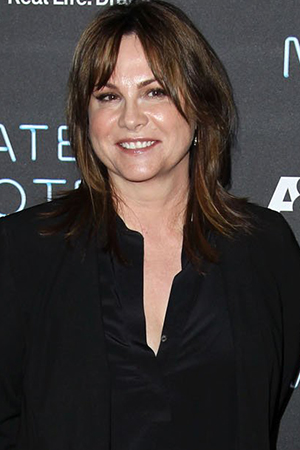 And so we get to spin that in emotion and see how that plays out. Sometimes Norman and Norma remind me of those paint things at Carnival where you pour paint in them and then they spin around and the colors fly out. Then they make these amazing abstract art things. And I feel like that’s what Norma and Norman, you get them in a specific psychological place and then you let them go and you see what happens. And there’s a lot of spinning out this season between them.
FREDDIE HIGHMORE: I think that maybe one other interesting thing is though there will be this increasing separation between the real Norman and the real Norma, there will also be, by the end of the season, almost a complete convergence of the two at one moment where you’re almost not entirely sure which person it is in a teasing the general fashion.
KERRY EHRIN: Sounds good.
QUESTION: Is there any different as the other Norma has appeared more and more? Freddie, is it any different for you to act with the imaginary era as opposed to the actual mother?
FREDDIE HIGHMORE: I think it’s interesting. We’ve experimented with in many ways this season how Norman himself is behaving in those, which comes a lot from the writing, how he’s behaving in those moments with this vision of her and whether he’s purely imagining her there in front of him, whether he is imaging himself as her, whether he’s talking out loud in using her words or whether he’s merely listening and hearing them.
And from what perspective do we see those scenes? Is it purely from Norman’s perspective or is it from the third person storytelling that we’re used to in most television shows? So though they all play a part, I think when we’re doing those scenes between Norman and this vision, this mother, this Norma character.
But there’s also a new sense of freedom to be found in them because it isn’t, ways in which they might interact, isn’t the reality and so that opens up exciting new possibilities for how both Norman and Norma can behave.
KERRY EHRIN: Mm-hmm. And also the hallucinations to him are incredibly real and I think that the big goal is to get people to go on a journey with Norman. If you’re crazy and if you are imaging, I guess I shouldn’t use the word crazy.
If you are imagining something that isn’t there to you it is incredibly real and that’s what you want people to be inside of, is that part of it? And it’s actually really exciting to get to get to develop the fictional, the hallucinatory version or versions of Norma as a really, you know, that’s a pretty exciting thing to get to do.

Latest Articles
Interviews
 Dark Matter Season 2: Blake Crouch on Expanding Beyond the Book, Diverging from the Main Story & More
 Monday, 28 September 2026
 Outlander: Blood of My Blood Season 2: Harriet Slater, Jamie Roy, Jeremy Irvine & Hermione Corfield on Love, War, & Separation
 Saturday, 26 September 2026
 Outlander: Blood of My Blood S2: Matthew B. Roberts & Maril Davis on Trauma, History & Storytelling
 Wednesday, 23 September 2026
 Dark Matter Season 2: Dayo Okeniyi on Leighton's Hubris & Oluko's Faith in the Box
 Tuesday, 22 September 2026
 Tommy & Tuppence: Josh Dylan and Antonia Thomas on Modernizing Agatha Christie
 Tuesday, 15 September 2026
 Jimmi Simpson Breaks Down Dillard’s Walker Family and His Shocking Turn on The Walking Dead: Dead City
 Sunday, 13 September 2026
 Aimee Garcia on Renata’s Hope, Trauma, and Walker Transformation in The Walking Dead: Dead City
 Sunday, 13 September 2026
 The Walking Dead: Dead City's Showrunner on Moving Maggie & Negan Forward, Episode 6 & Where a Potential Season 4 Could be Headed
 Thursday, 10 September 2026
 Dark Matter Season 2: Jennifer Connelly and Joel Edgerton on the Emotional New Season
 Saturday, 05 September 2026
 Dreams in Nightmares: Charlie Barnett, Sasha Compère & Mars Storm Rucker Talk Personal Truths & More
 Friday, 04 September 2026
Reviews


